More than a vendor: How AM Batteries and Lebbing built a partnership, Part 1
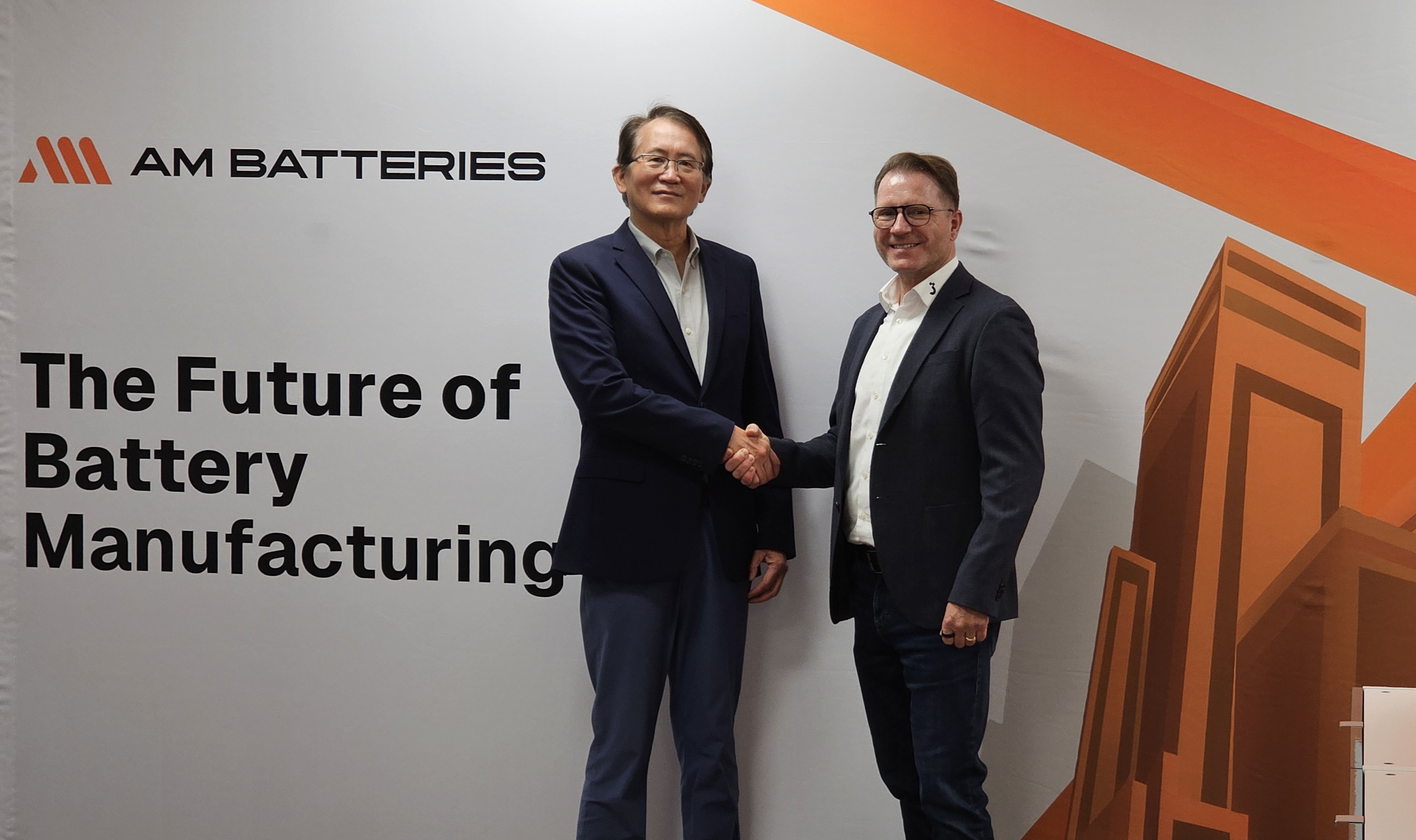
Some partnerships start with a signed contract. This one started with a flight to Sweden: on July 5th, three years ago, Lie Shi flew there on his very first day at AM Batteries (AMB), to meet Thomas Lebbing, former Managing Director for Jagenberg Converting Solutions and current Managing Director at Lebbing automation & drives GmbH, and his team. That first meeting was about a technology that eliminates one of the battery industry's most stubborn bottlenecks: the wet coating process. Since then, AMB, Jagenberg Converting Solutions and Lebbing have grown from a first equipment delivery into what both sides now call a strategic partnership.
Recently, Isabell Lebbing, Communication and Marketing Manager at Lebbing, travelled to AMB's site in the US together with Thomas Lebbing. There, they met Lie Shi, CEO of AM Batteries, and AMB Vice President of Engineering Charles Garris. Their conversation centered on how the partnership came to be, what sets it apart from a typical supplier relationship, and how it will look in the future.
Mr. Shi, before we talk about the partnership, help us understand what AM Batteries does differently. Your process is a so-called dry process. What makes this different to the conventional wet coating used across the industry?
Lie Shi: For the last thirty to forty years, lithium batteries were made using a wet process. It requires a toxic solvent, an oven up to a hundred meters long to remove that solvent, and a costly recovery system to capture it again. AM Batteries developed a powder-to-electrode deposition process instead. Through precise particle engineering, we deposit engineered particles directly onto the current collector. No solvent, no oven, no recovery system. That is why we call ourselves a disruptive technology.
And that is where Lebbing comes in?
Lie Shi: Exactly. A process this different needs a different kind of control system behind it. That is the gap Lebbing has helped us close.
Let's take it back to the beginning for a moment: How did the collaboration between AM Batteries and Lebbing work during the ramp-up phase?
Charles Garris: It was fantastic from the very start, genuinely collaborative. Our team and Lebbing's team worked closely together on the design requirements and the end-customer needs, right down to documentation and labelling. That was not always easy. Parts of our process are confidential, so Lebbing had to build a system around requirements they could only partly see. They handled that with real professionalism. The result is a solution both sides would have designed even with full visibility into each other's work.
Thomas Lebbing: We understood from the outset that AMB could only give us limited visibility into parts of its process. That is entirely normal when working under an NDA, and we fully respected those boundaries. In fact, when a partner protects its intellectual property so carefully, it is a positive sign—it shows they have something genuinely valuable worth protecting.
What sets this partnership apart from a traditional supplier relationship?
Charles Garris: I think of it in three categories: a vendor, a supplier and a strategic partner. A vendor is transactional, like a vending machine. You know exactly what you get, and if the price or quality is wrong, you simply switch. A supplier is a relationship you rely on for expertise and fair terms. A strategic partner is different. You often start with real uncertainty. You know what you want to achieve, but not exactly how. It becomes almost like a marriage. The outcome is shared, the knowledge is complementary, and both sides manage the risk together. You don't walk away over one price or delivery issue, because something bigger is at stake. Lebbing was never a supplier to us in that sense.

A supplier is a relationship you rely on for expertise and fair terms. A strategic partner is different. You often start with real uncertainty. You know what you want to achieve, but not exactly how. It becomes almost like a marriage. The outcome is shared, the knowledge is complementary, and both sides manage the risk together.
Charles Garris,
AMB Vice President of Engineering
Thomas Lebbing: That matches exactly how we saw it too. When AMB first came to us, we didn't have a catalogue answer for them. We had to figure a lot of it out together, and that's a different kind of relationship than just filling an order. It only works if both sides are willing to take on that uncertainty.
That division of labor is exactly what makes a partnership work: each side does what it does best. At AMB, you don't just supply electrode material. You offer complete systems, know-how, and process expertise. Mr. Shi, where does your own scope end, and where does a partner like Lebbing take over?
Lie Shi: It depends on the customer. Major battery manufacturers usually have their own engineering divisions, so we license the technology and work with their teams on the architecture. Many companies in the US, though, are newer to the battery industry and don't have that internal capability yet. In those cases, we either supply electrodes directly, or we build the equipment together with the customer. This is exactly where we rely on partners like Lebbing for the control systems. And it matters to our bigger customers, too. They want to know who is behind the controls, and Lebbing is one of the names we can point to with confidence.
What role could a partner like Lebbing play in your ecosystem in the long term?
Lie Shi: Several. The most direct is supplying control systems. One of our pilot lines runs entirely on Lebbing's systems today, and that will likely be true for our future tandem line and for equipment we eventually sell to battery manufacturers. Beyond that, even customers who want to build their own lines rather than buy equipment from us can turn to Lebbing, because the control system for our process is already developed and proven. Lebbing has worked with us for over three years now, and that system has become part of the technology package we hand on to battery manufacturers.
Looking ahead, how long will it take to move from today's pilot lines to stable, tandem, double-sided mass production, and what role will this partnership play in getting there?
Lie Shi: We expect to secure funding for a tandem line within the next six months. Building it will then take another one to two years. Partners matter enormously here, not just for the equipment itself, but for the confidence they give our customers that the technology is ready to scale.
Mr. Shi, before we close, is there anything about this partnership you'd like to add?
Lie Shi: Yes. I've been working with Lebbing for three years now. We met my very first day at AM Batteries, when I flew to Sweden and met Thomas and his team. Lebbing brings exactly what we were missing in the US battery supply chain: manufacturing engineering expertise and genuinely good workmanship. I hope we keep working together for a long time.
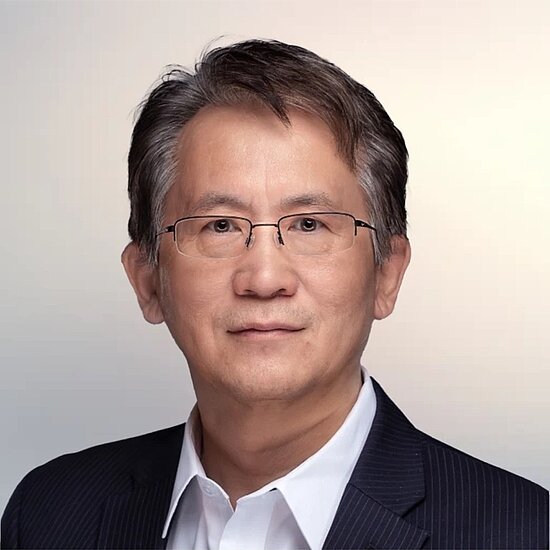
Lebbing brings exactly what we were missing in the US battery supply chain: manufacturing engineering expertise and genuinely good workmanship.
Lie Shi,
CEO of AM Batteries
Mr. Shi, Mr. Garris, thank you both for such an open and insightful conversation, and for welcoming us so warmly at your site.
The partnership is only half the story. In the next issue of Jagenberg Group TOGETHER, we dive deeper into the technical side: how automation and control systems make dry electrode manufacturing possible at industrial scale.


